Você está no 3DFinder
Buscamos em Thingiverse, MakerWorld e Printables ao mesmo tempo para te dar o melhor de cada uma.
Descrição
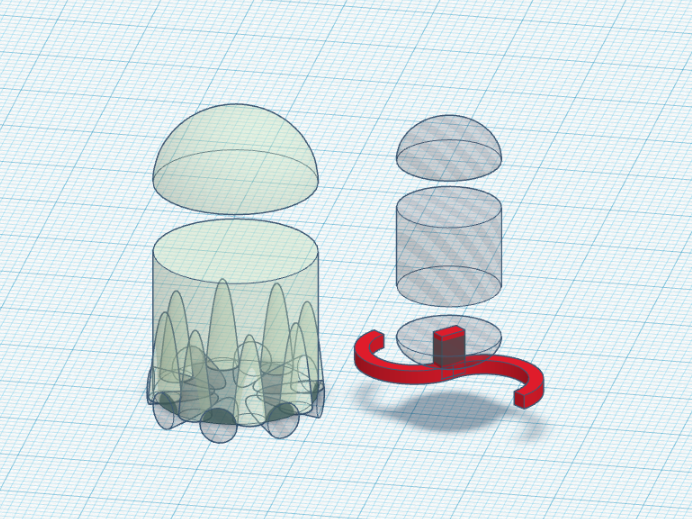
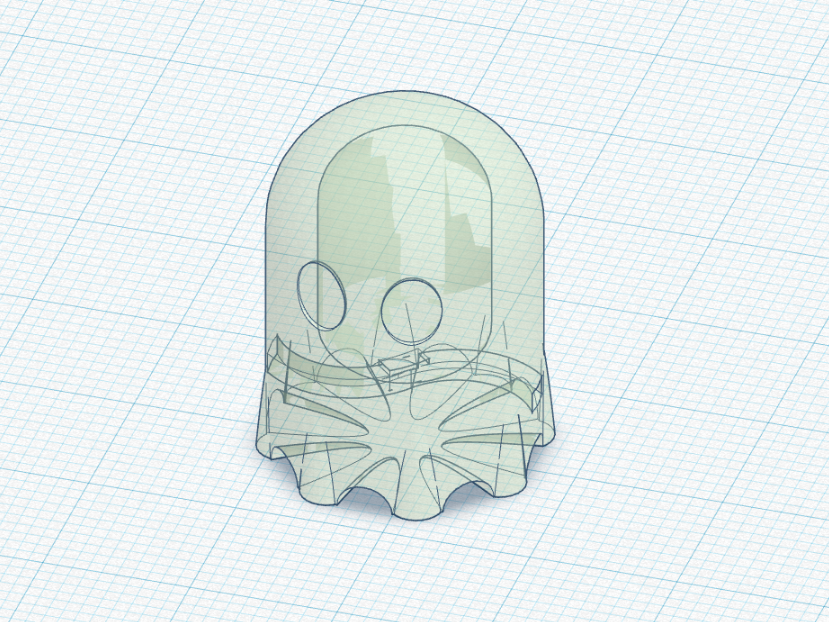
Cartesian pacman ghost diver
 |  |
Recommend materials: PLA, PLA+, PETG
Print infill: 100%
Control the floating, sinking and rotating of object by changing the pressure in the liquid.
Archimedes' law
Archimedes' law is a physical law of hydrostatics formulated by the Greek philosopher Archimedes of Syracuse and its exact wording is:
"A body immersed in a liquid is lightened by the buoyant hydrostatic force, the magnitude of which is equal to the weight of the liquid with the same volume as the volume of the immersed part of the body."
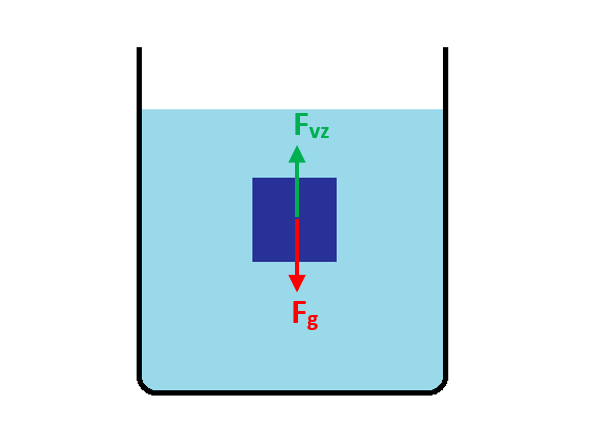
This means that a body immersed in a liquid has a gravitational force that pulls it down. In the opposite direction, the hydrostatic buoyancy force acts, which lightens the submerged body and pushes it to the surface. The resulting force and direction of movement of the body depends on the density of both the body and the liquid.
A body immersed in a liquid can therefore:
|
 |
Classic Cartesian diver
The Cartesian Diver, or sometimes called the Cartesian Devil, demonstrates the principle of change in buoyancy. It is named after René Descartes. By changing the pressure, the average density of the body changes, which continuously changes the buoyancy and we can thus control the rise or fall of the body in the liquid.
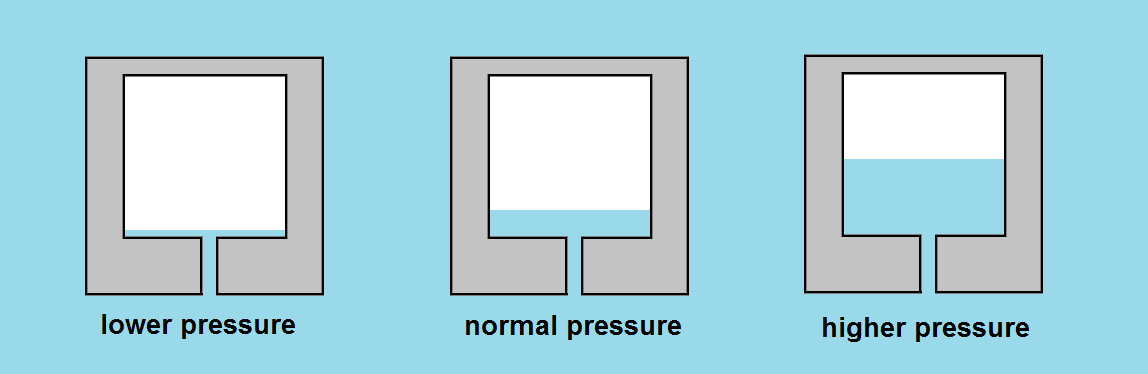
If a Cartesian solid is immersed in a PET bottle with water, it floats at normal pressure. If we push on the bottle, we increase the pressure. This changes the average density of the body and it starts to decrease. Since liquid is incompressible but gas is, the air bubble in the cube is compressed and replaced by water. The average density of the cube increases and the cube sinks to the bottom. After the pressure is released, the compressed air in the cube expands, pushing the water out of the cube, which reduces its average density and so the cube rises towards the surface.
How to properly spin the object
If we gradually increase the pressure, the air chamber fills with water and the body sinks. For rotation, we must first make the body float in the center of the bottle. Then, by quickly squeezing and relieving the bottle, we create a pulsation of water in and out. The important thing is to find the right frequency to achieve resonance with the rate of filling and draining the water. That's about one press per second.
Check my other project of cartesian diver: