Você está no 3DFinder
Buscamos em Thingiverse, MakerWorld e Printables ao mesmo tempo para te dar o melhor de cada uma.
Descrição
This resistance was created for an educational escape game.
A clue or a reward can be hidden inside the Cryptex.
This is a fun way for students to learn how the color code of resistors is defined.
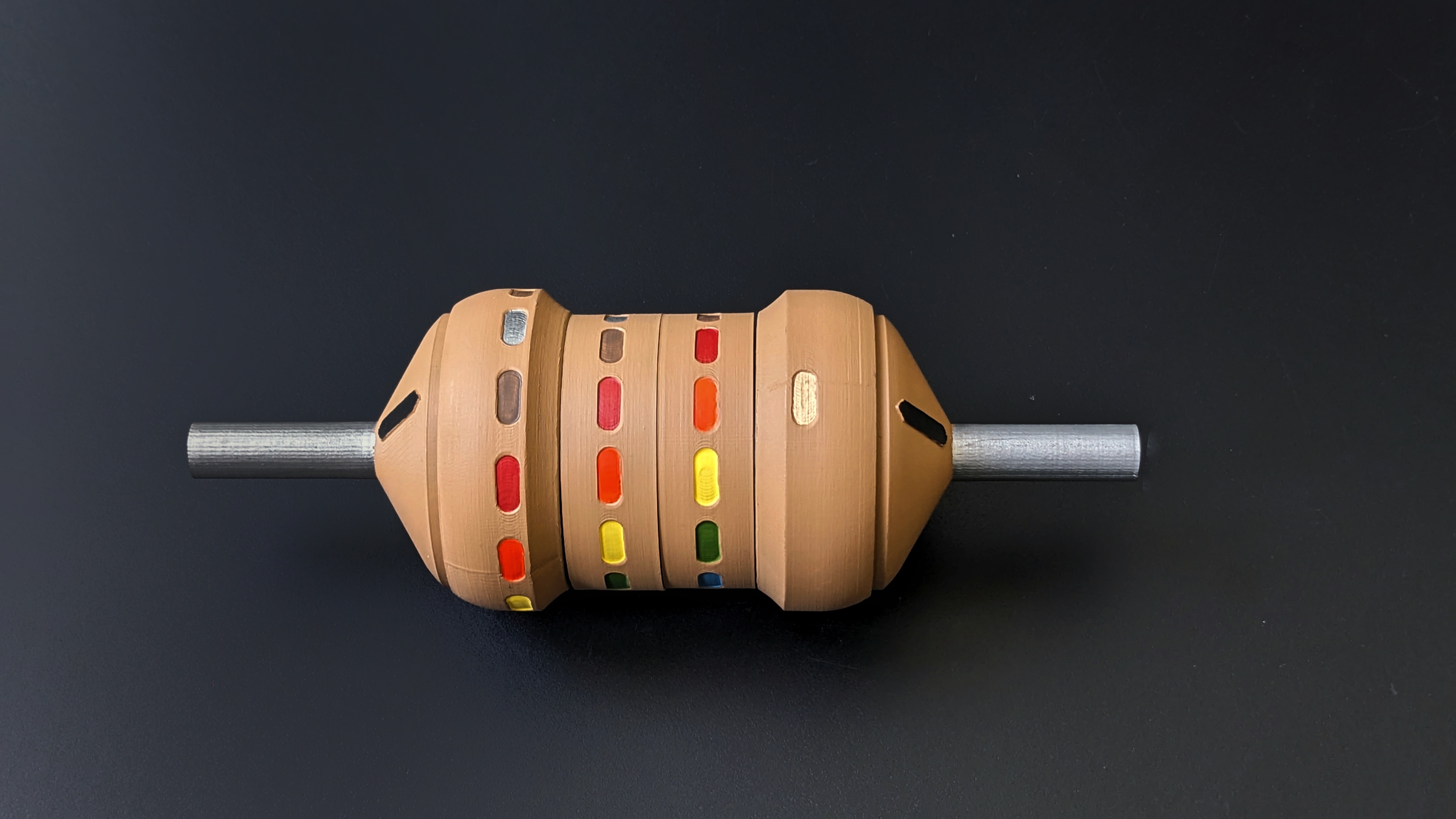
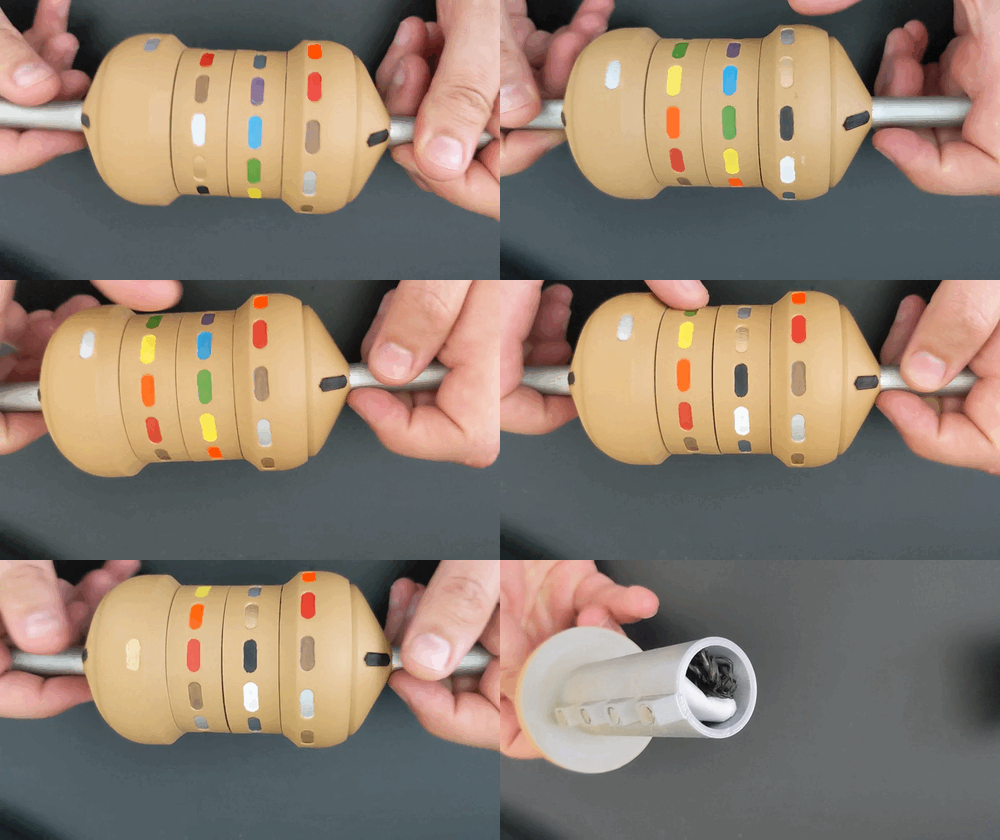
 Any resistance value can be set, but you should remember which value is set. There are 20736 possible combinations.
Magnets are used for precise positioning.
Production:
All components were printed from PLA.
Support is not required.
The inner tube and outer tube must each be glued with an end section; superglue is particularly suitable for this.
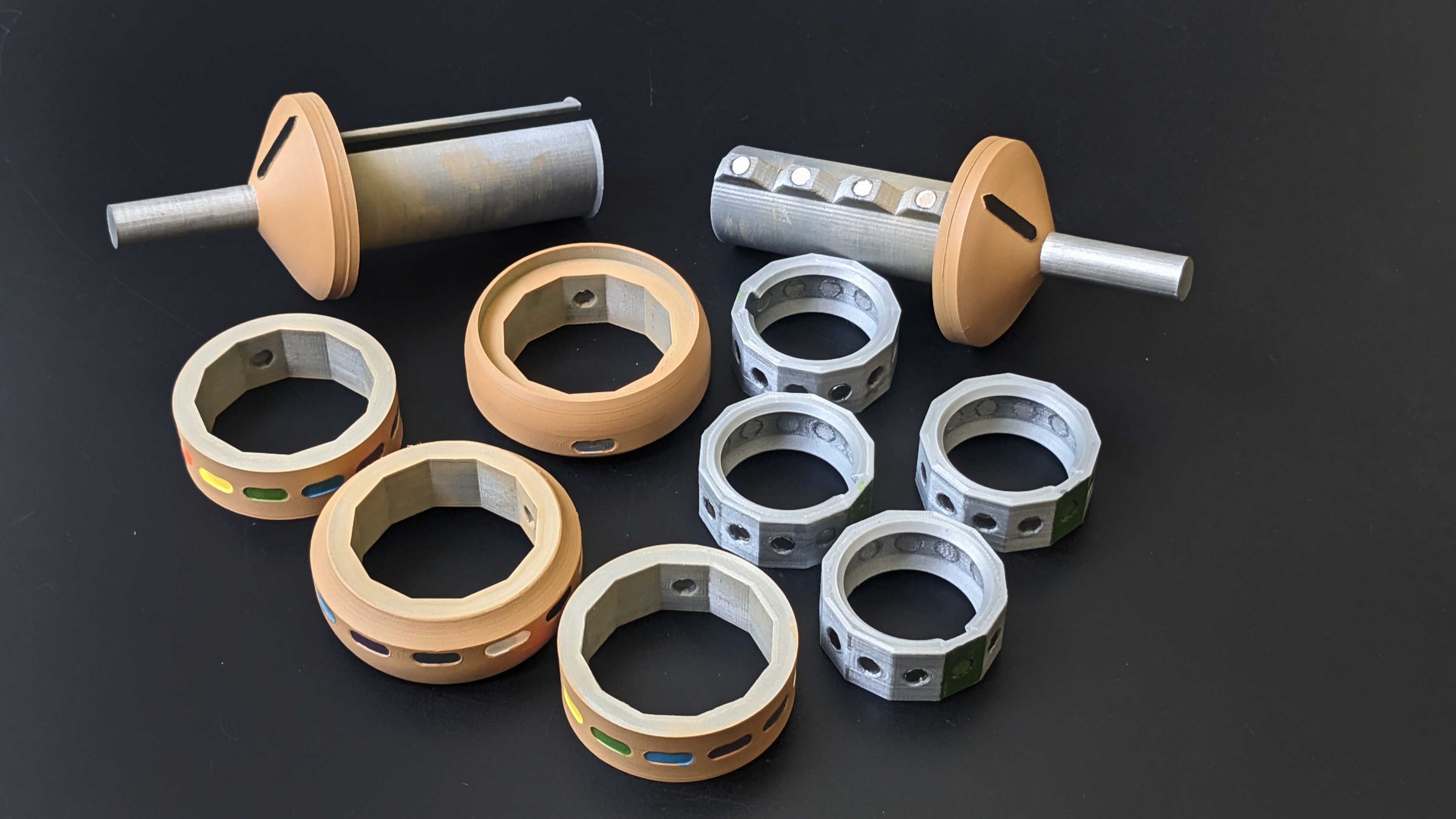
After assembly, the parts can be painted. Paints from Revell were used for the model shown here. The beige surfaces were applied by airbrush, while the color code segments were painted with a brush.
The area with the notch on the inner ring is marked in color - this makes it easier to set a resistance value later.
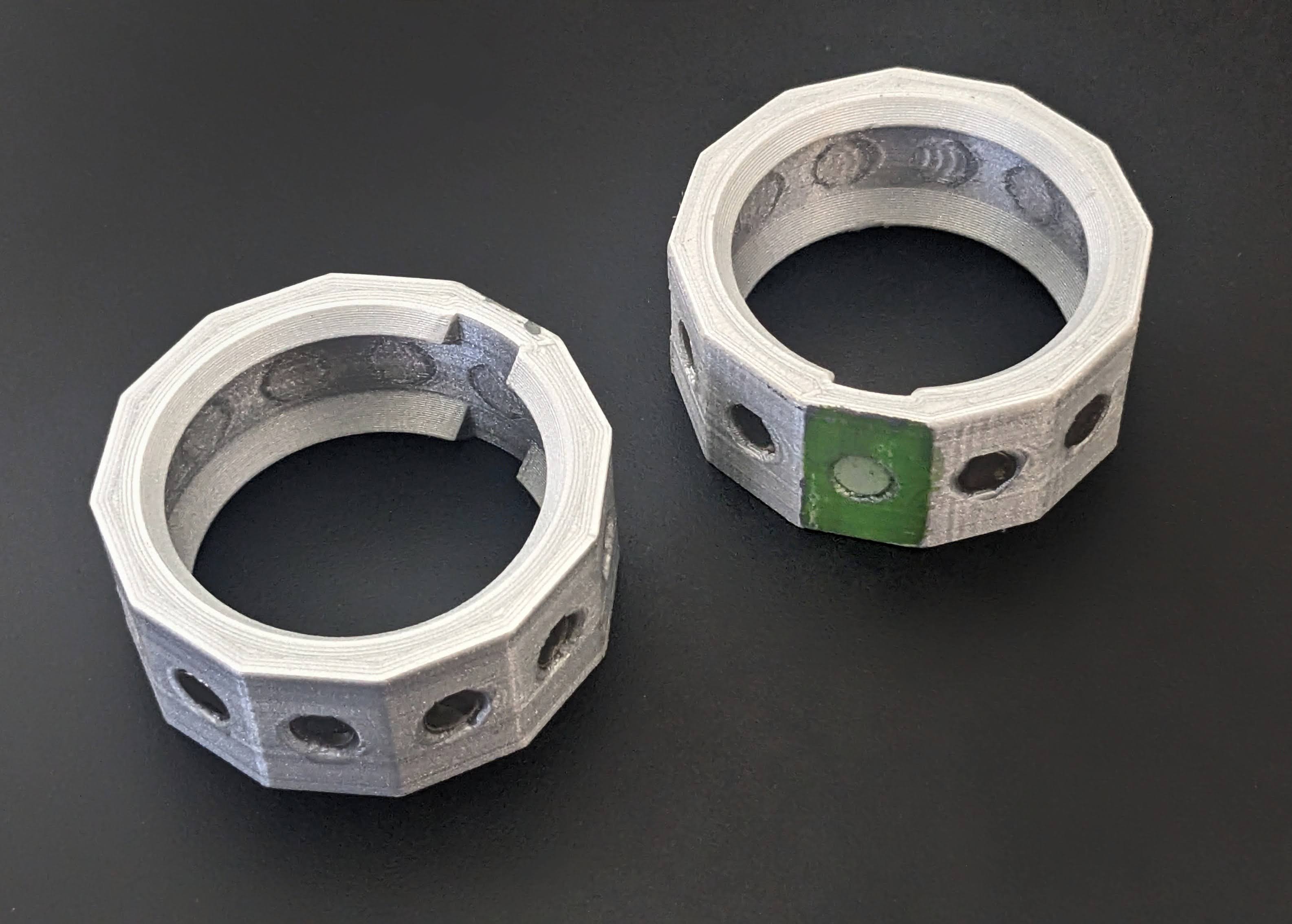
The magnets are inserted in the next step. A total of 52 disc magnets with a diameter of 6 mm and a height of 2 mm (ø6 × 2 mm) were used.
A UV-activated superglue was used for bonding. Compared to conventional superglue, this has the advantage that it only hardens under UV light - this reduces unintentional sticking of the fingers and makes it much easier to apply.
Important: Make sure the magnets are correctly aligned when gluing. They must be inserted in such a way that the inner rings and the inner tube attract each other.
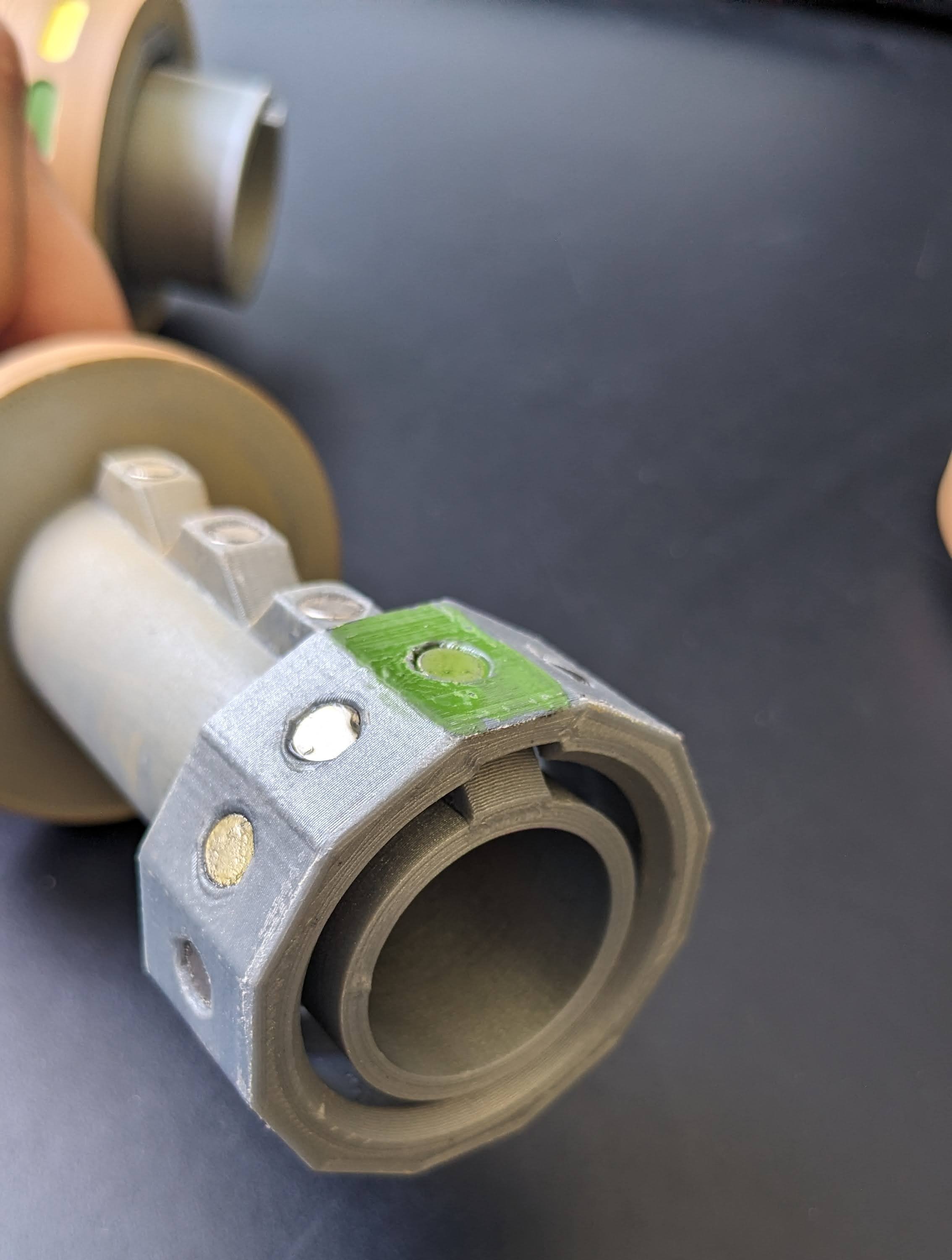
The inner rings can now be pushed onto the outer tube. To make assembly easier, the outer tube can be pressed together.
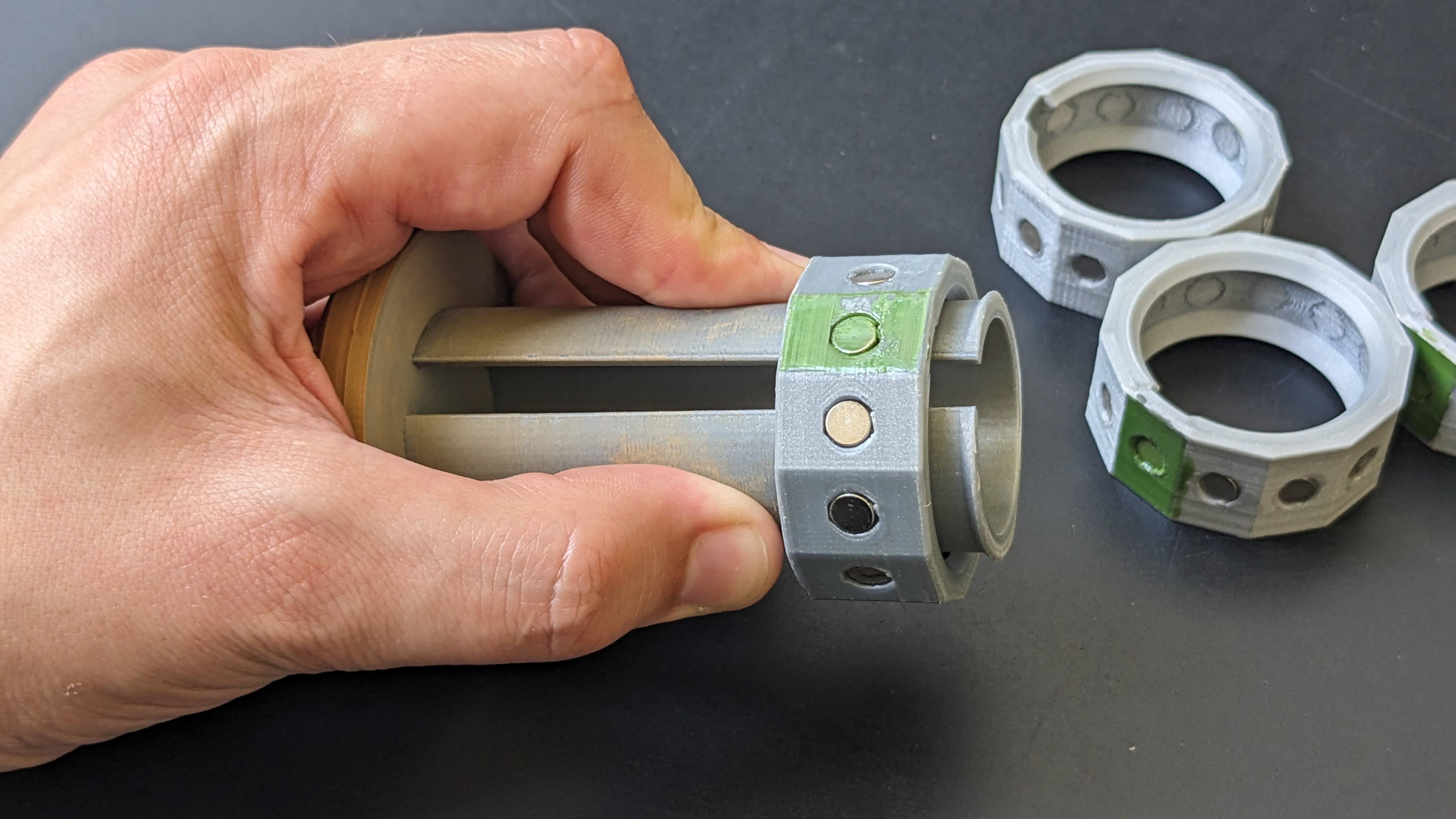

The colored rings can then be slid onto the cryptex. The painted markings on the inner rings help to set the correct combination according to the desired resistance value; shown here brown.
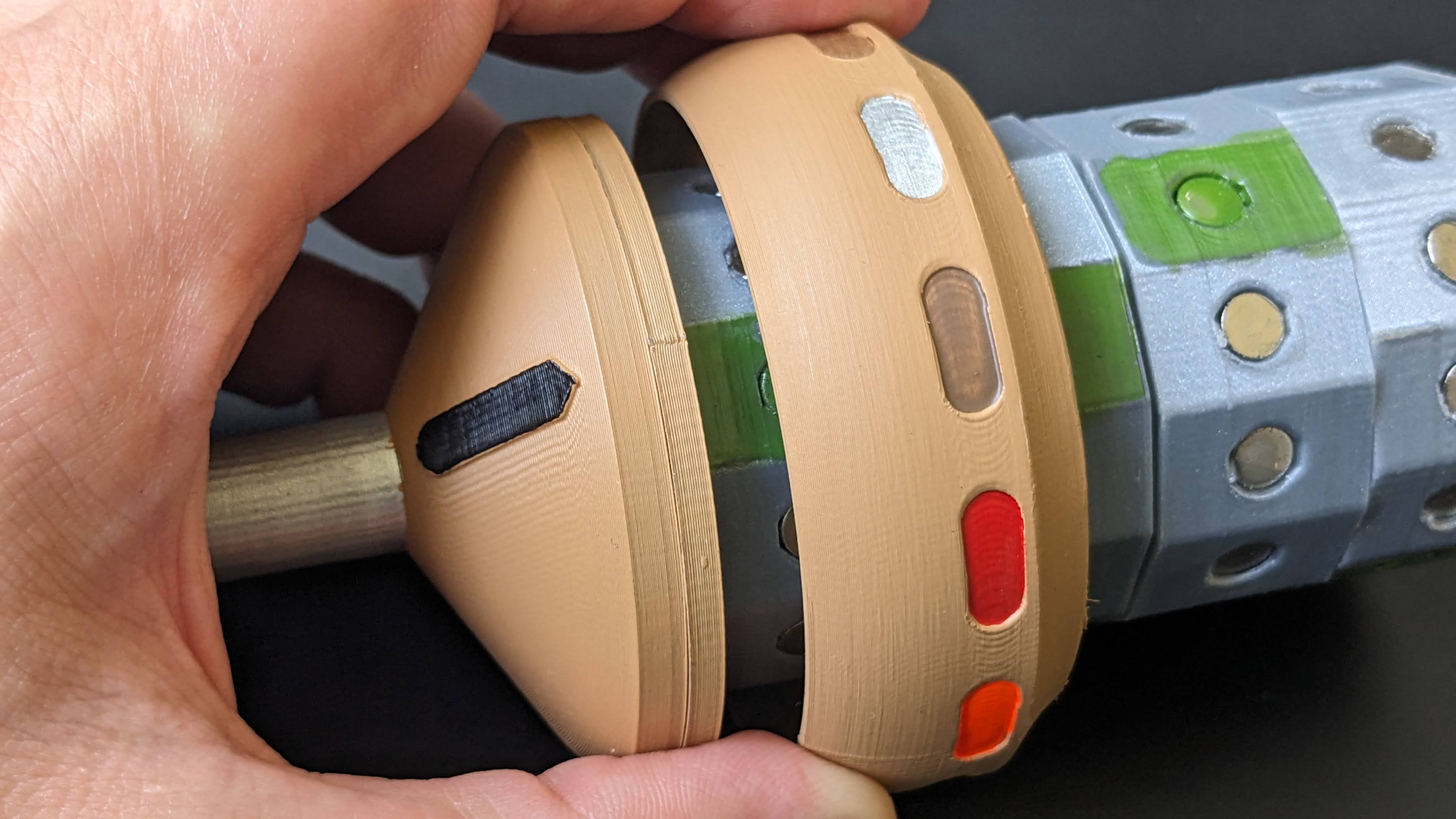
Once all the color rings have been pushed onto the outer tube, the inner tube can be inserted.
Now the color rings can be twisted - and the puzzling can begin!
About the license:
Commercial use is prohibited, except for educational purposes.
Commercial use in the context of educational or research projects is also permitted - as long as the model is not sold directly or marketed as part of a commercial product.
Please contact me in advance if you have any uncertainties or special use cases.