Você está no 3DFinder
Buscamos em Thingiverse, MakerWorld e Printables ao mesmo tempo para te dar o melhor de cada uma.
Descrição
The original Polydron panels consisted of triangles, squares, pentagons, and hexagons, all with identical side lengths, which cleverly interlock to enable construction of various 3-dimensional shapes. (See e.g. [https://www.polydron.co.uk/construction/polydron-class-set.html](https://www.polydron.co.uk/construction/polydron-class-set.html)). I had much joy with mine.
Note that there is also a compatible version of Polydron Frameworks available for printing. Based on years of use, a number of drawbacks to the original Polydron panels were identified:
- Cost and availability, being high and low respectively. The rate of exchange of the British pound does not help here, and neither does residing in the colonies.
- Durability - over the years I have had to retire quite a few of my precious panels, mainly due to cracks in the plastic finger acting as a spring to allow the interlocking mechanism to engage, and to stay engaged.
- Tightness of fit - perhaps related to the previous problem, not all edge joints are sufficiently tight/robust to withstand even gentle handling.
- Minimum angle between panels – this is limited to about 55°, at which point the interlocking mechanism starts taking strain, and is on the verge of disengaging.
- Rhombi: long ago Polydron also made two types of rhombus, with the ratio between the long and short axes being sqrt(2) and the golden ratio (1.4142 and 1.618) respectively. This enables the construction of, amongst others, rhombic dodecahedra and rhombic triacontahedra, and is in general just cool. However, probably because the unwashed masses did not appreciate said coolness (as is their wont, most depressingly), production of these pieces has been discontinued, and by the time I had the money to possibly afford it, it was too late. Tears were shed, and the money was spent on a Prusa Mk4 instead.
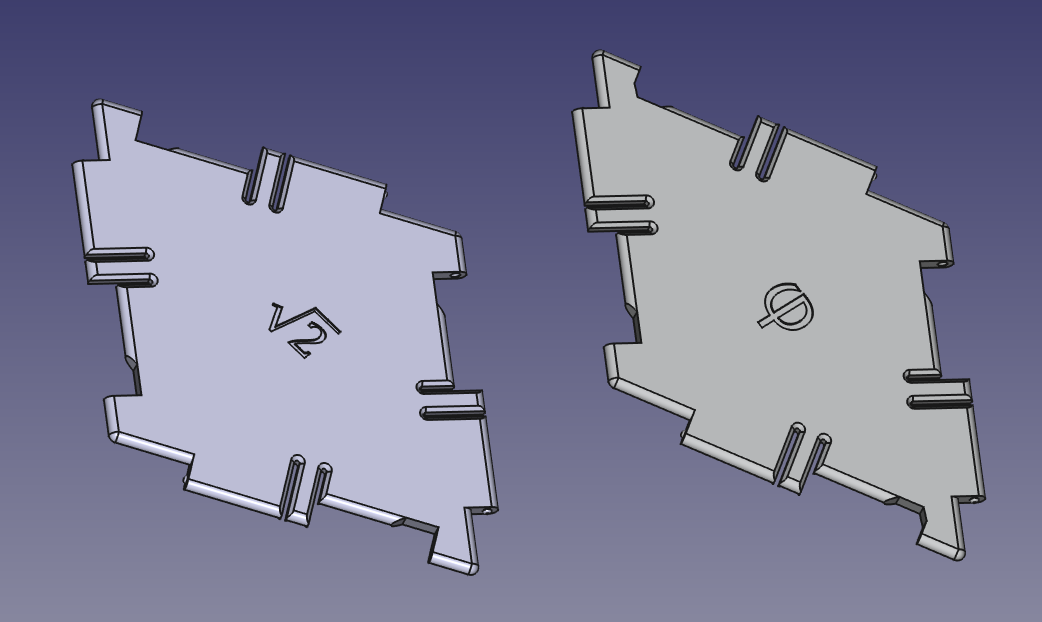
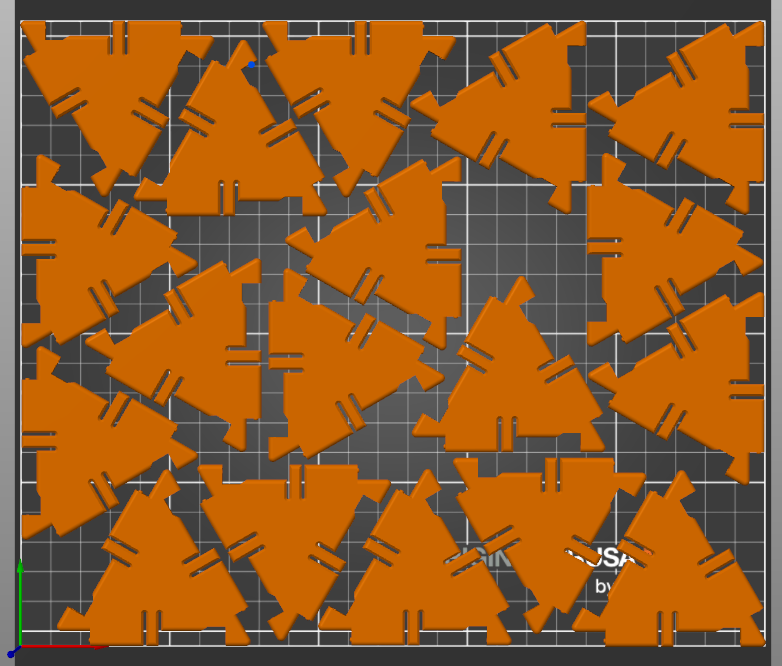
So, while rectifying the final issue listed above, seemingly all the others were also inadvertently addressed. Increasing the relevant edge clearance has reduced the minimum angle between panels to about 40°, and the fit has been made slightly tighter on purpose. Only time will tell if the durability issue has truly been solved, but of course it is now a simple and quite cheap matter to simply run off another batch if things do wear out. You can never have enough triangles; I was able to fit 17 on the bed of my Prusa, with a nagging suspicion that it may be possible to squeeze in one more, if only one were more intelligent. However, thus far all my feeble attempts failed. At least 17 is a prime number…
Update 2024-11-14: The suspicion nagged with reason: I have indeed succeeded in fitting 18 triangles on the 250x210mm bed - see file 'Triangle x18.3mf'.
An interesting article on the desirability of rhombi:
https:// archive.bridgesmathart.org/2013/bridges2013-71.pdf

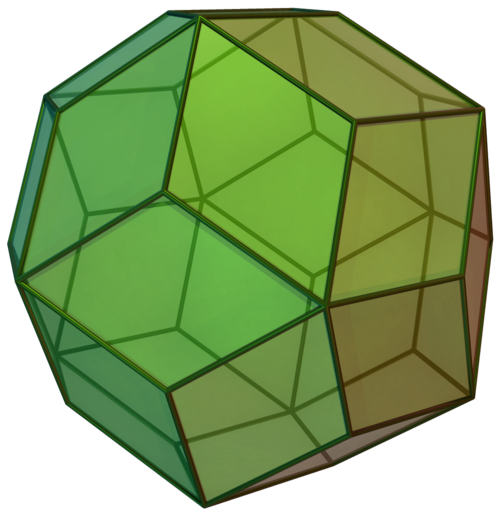
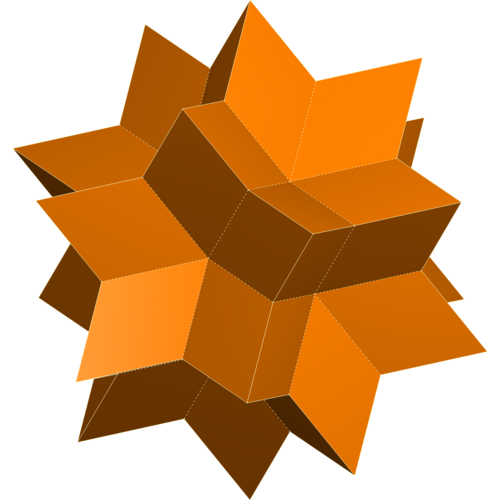
Of the rhombi you want at least a dozen of the Sqrt(2) version, to make a rhombic dodecahedron, and probably lots more after reading the article referenced above. And you need no fewer than 30 of the golden ratio rhombi (denoted by the Greek letter phi φ) for a triacontahedron, after which the rhombic hexecontahedron with its 60 golden ratio faces is an almost irresistible goal.
Printed without rafts and supports in PLA, at 0.15mm and 15% infill (using the PrusaSlicer 0.15mm Speed profile). Even better is then to activate the variable layer height, at the 0.50 speed/quality balance setting. Ironing of the top layer might be lovely, but it takes half of forever, so I have convinced myself that the finish is actually quite fine already. But go for it, if you have the time and the inclination. It also works in PETG.
No post-processing required - pop them off the plate and start playing instanter.
I have tweaked the design to be completely compatible with my existing surviving original Polydron panels, but this may depend on your printer, of course.
If the fit is too tight, consider a small negative 'XY Size Compensation' or its equivalent in your slicer of choice, or conversely a positive value in case of a too loose fit. And with small I mean exactly that - adjust a few tens of microns at a time. I suggest first printing single triangles to test and adjust the slicer settings, until you are certain that everything is dialed in perfectly.
Parametrically designed in FreeCad.
Gostou deste modelo? Crie uma conta grátis para salvar seus favoritos e voltar a eles depois.
Criar conta