Você está no 3DFinder
Buscamos em Thingiverse, MakerWorld e Printables ao mesmo tempo para te dar o melhor de cada uma.
Descrição
关于算盘:
算盘是古代中国的计算机,核心算法是一种高效的混合进制——五升十进制。 当下面一排的4颗算珠全部靠梁后(表示为4),再加1,无法用本排表示。此时,我们清空下排(归零),并拨动一颗上排算珠(代表5)来代替。这实现了“5”这个单位的压缩存储。 逢十进一:当本档的数值达到9(上5下4),再加1时,本档无法表示。于是我们清空本档(归零),并向左一档进1。这就是我们熟悉的十进制进位规则。神奇的是,中国古代的进制不是10,而是16进制,因此上面是2个珠子下面是5个(这也是我设计的算盘的方式)。
算盘的运行机制使得算盘在进行加减运算时,速度极快,因为它将复杂的算术转化为了简单的机械动作组合。 如果从现代的计算机思维理解,使用算盘运本身就是一种编程过程:
输入:通过手指拨动算珠,将原始数据“写入”算盘。执行算法(口诀指导),操作者大脑中存储的“口诀”(如“三下五去二”)就是预编好的程序。它指导着手指完成一系列标准的、最优化的拨珠动作。
输出(读取结果):运算结束后,算盘上显示的珠像就是最终的计算结果。
整个过程,人是中央处理器(CPU),算盘是算术逻辑单元(ALU) 和内存,而口诀就是运行的软件程序。
The abacus was the computer of ancient China, and its core algorithm is an efficient mixed-base system—a five-promotion decimal system. When all four beads in the lower row are moved toward the beam (representing 4), adding 1 more cannot be represented in the same row. At this point, we clear the lower row (reset to zero) and move one bead from the upper row (representing 5) as a substitute. This achieves the compressed storage of the unit "5."
Carrying over when reaching ten: When the value in a column reaches 9 (5 from the upper bead + 4 from the lower beads), adding 1 more cannot be represented in that column. Thus, we clear the column (reset to zero) and carry 1 over to the column on the left. This follows the familiar decimal carry-over rule. Interestingly, ancient China also used a hexadecimal system (e.g., 1 jin = 16 liang), which is why traditional abacuses had 2 upper beads and 5 lower beads (this is also the design I adopted for my abacus).
The operational mechanism of the abacus enables extremely fast addition and subtraction, as it transforms complex arithmetic into simple mechanical movements. From a modern computational perspective, using an abacus is essentially a form of programming:
- Input: The original data is "written" into the abacus by moving the beads with fingers.
- Algorithm execution (guided by formulas): The "formulas" stored in the operator’s mind (such as "three down five remove two") act as pre-programmed instructions. They guide the fingers to perform a series of standardized, optimized bead movements.
- Output (reading the result): After the calculation, the bead configuration displayed on the abacus represents the final result.
In this process, the human acts as the central processing unit (CPU), the abacus serves as the arithmetic logic unit (ALU) and memory, and the formulas are the software programs being executed.
关于模型的打印:
模型采用PLA打印,设计中常见的算盘杆是圆柱的,这里采用了更容易打印的长方体打印,大大降低了打印难度,同时对珠子做了倒角,算盘珠是正常圆柱体的时候,准确的移动会很困难,就像下图这种(事实上我自己打印了多种珠子尝试)。The model is 3D-printed using PLA. While the rods in traditional abacus designs are typically cylindrical, here they are printed as rectangular prisms, which are easier to produce, significantly reducing printing difficulty. Additionally, the beads feature chamfered edges. When abacus beads are perfectly cylindrical, precise movement becomes challenging, as illustrated in the example below (in fact, I have experimented with printing multiple types of beads myself).
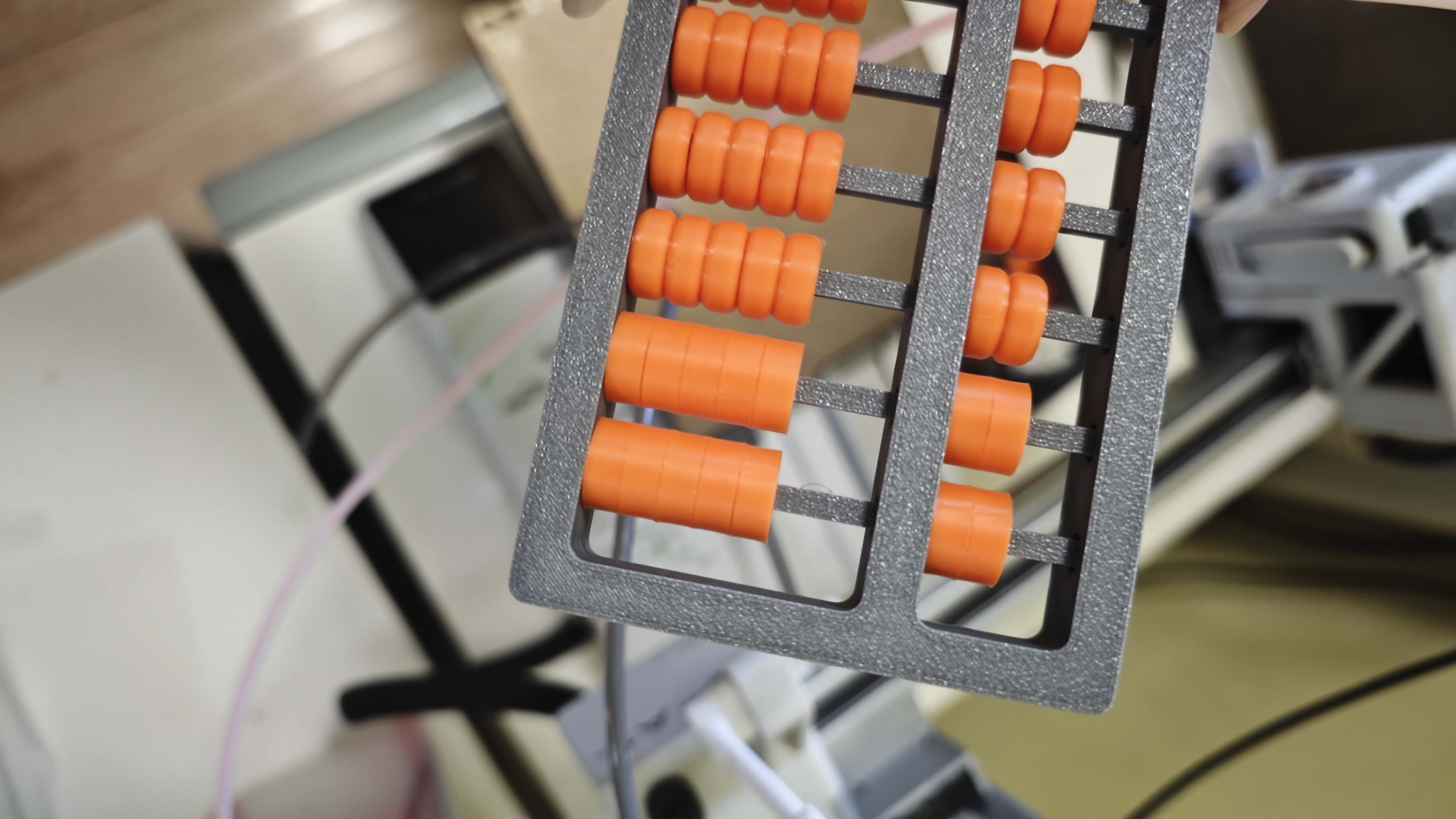
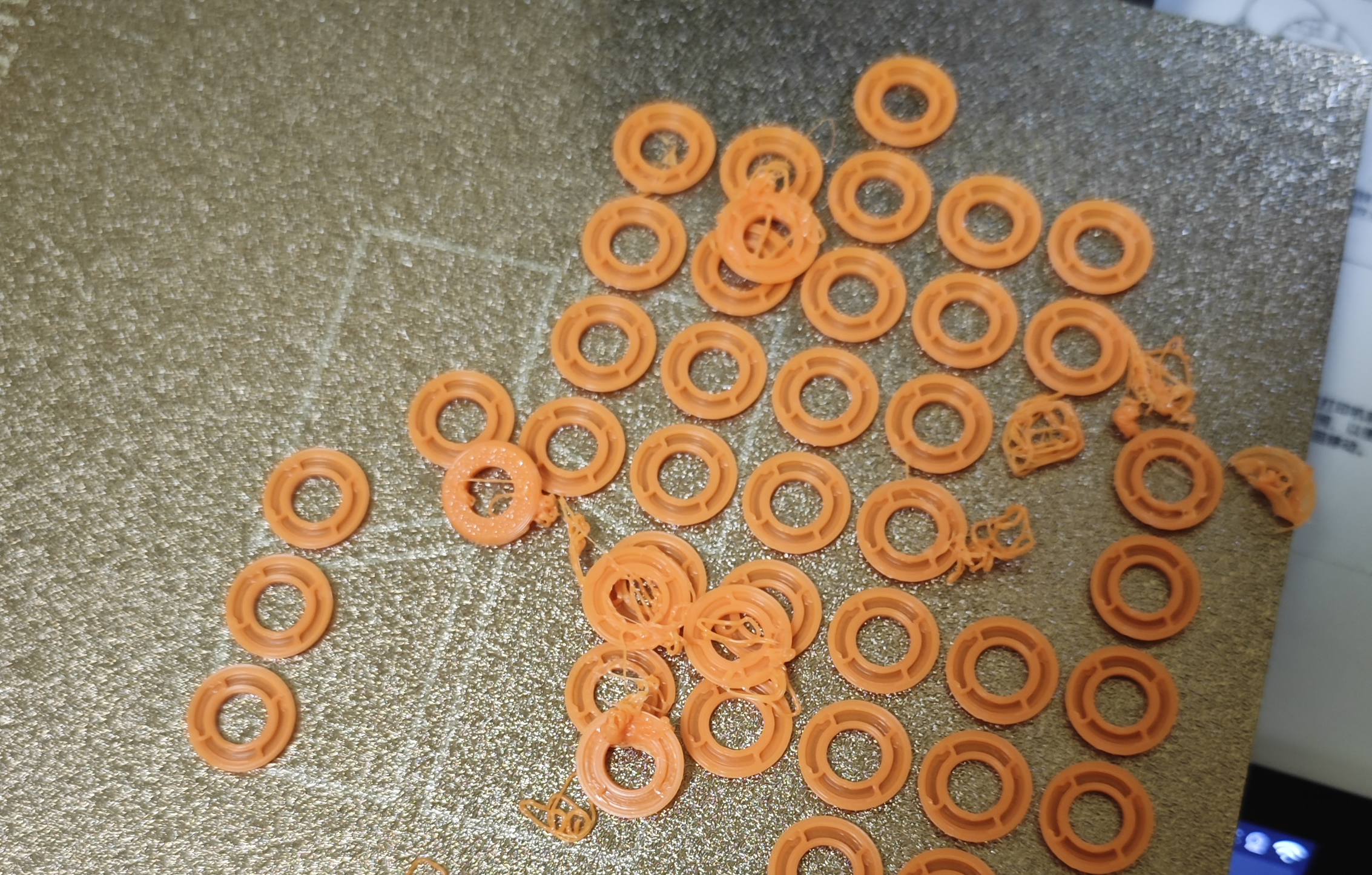
珠子没有摆满整个打印空间是因为那样很容易出现打印问题,尤其是出现一个珠子有问题全盘都不能使用,就像这样:因此十分建议根据自己的实际情况调整珠子的打印。The beads are not arranged to fill the entire print area because doing so can easily lead to printing issues. In particular, if one bead has a problem, the entire set may become unusable, as shown below. Therefore, it is highly recommended to adjust the printing of the beads according to your specific situation.
成品效果展示:
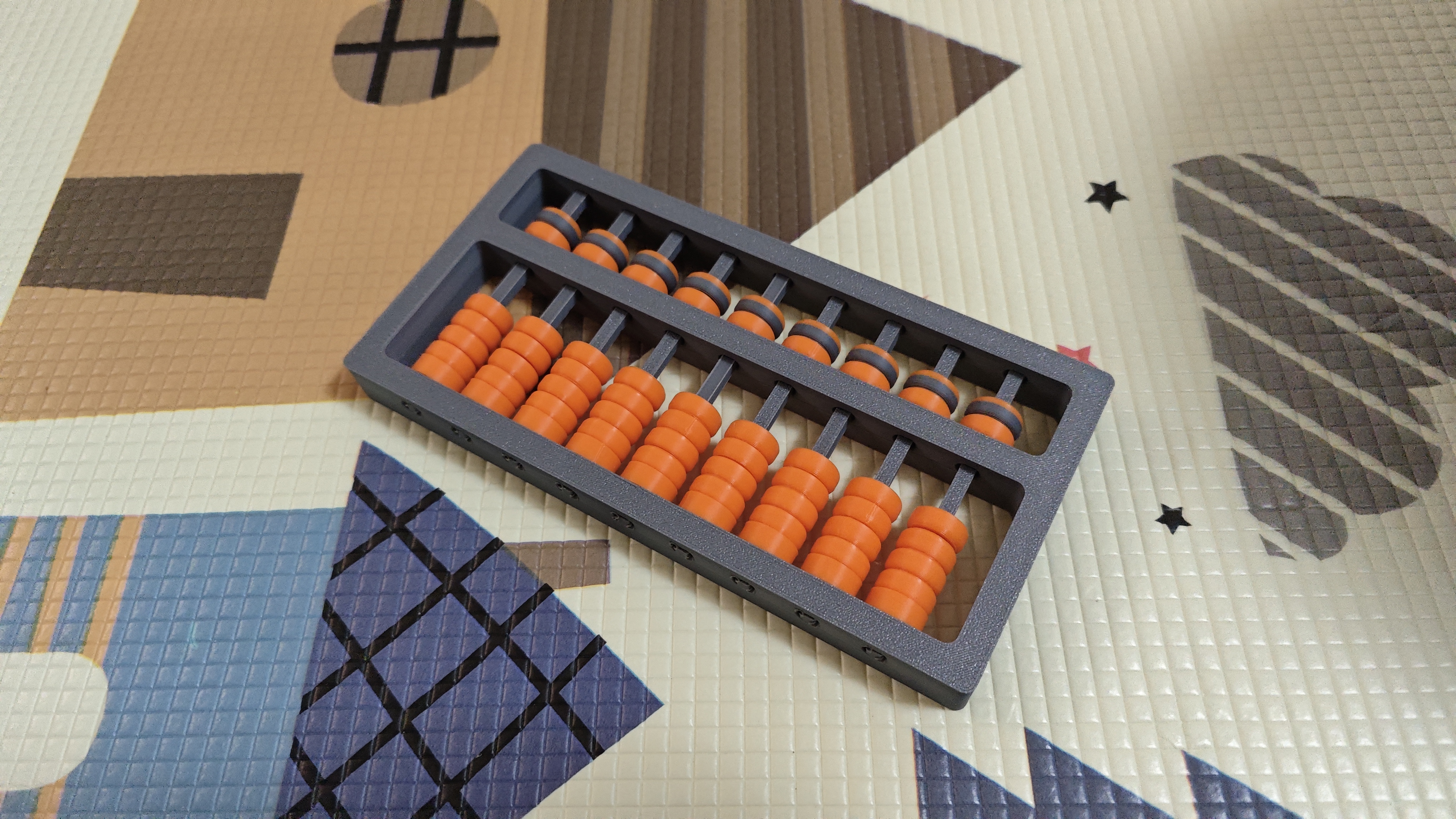
The Abacus: Ancient China's Computing Device(算盘)
Publicado em 26 de set de 2025
Gostou deste modelo? Crie uma conta grátis para salvar seus favoritos e voltar a eles depois.
Criar conta