Você está no 3DFinder
Buscamos em Thingiverse, MakerWorld e Printables ao mesmo tempo para te dar o melhor de cada uma.
Descrição
The advancement of technology in the current era brings many benefits, including in the field of education. Unfortunately, not all educational institutions are able to keep up with these developments equally. Many schools, particularly those in remote areas or with limited budgets, are still unable to provide adequate laboratory facilities.
One such facility is the microscope, which is essential for observing microorganisms. According to statistical data, glass waste has reached 0.7 tons per year. This type of waste can take up to 1,000,000 years to decompose. At the Astratech campus, there are more than four laboratories that use measuring instruments made of borosilicate glass.
Borosilicate glass has the advantage of withstanding rapid temperature changes without cracking or breaking. Due to this advantage, it is widely used in measuring instruments. This type of glass resists sudden temperature changes because of its low thermal expansion coefficient. Based on the authors' observations, used borosilicate laboratory glassware is still feasible for recycling and has the potential to be repurposed into a simple Leeuwenhoek microscope and basic microorganisms observation tools.
The purpose of this study is to determine how to utilize used borosilicate glass waste to manufacture a simple Leeuwenhoek microscope. The methods used are descriptive and experimental. The process involves sorting the glass based on clarity, then heating it to over 700°C. The glass is then pulled in opposite directions until it reaches a hair-like thickness (0.03–0.06 mm), and then it is snapped. The thinnest portion is reheated to over 700°C until a bead forms at the end, resulting in a glass bead with a diameter of 2.0–4.0 mm.
Here you can see the illustration of parts that needs to be assembled :
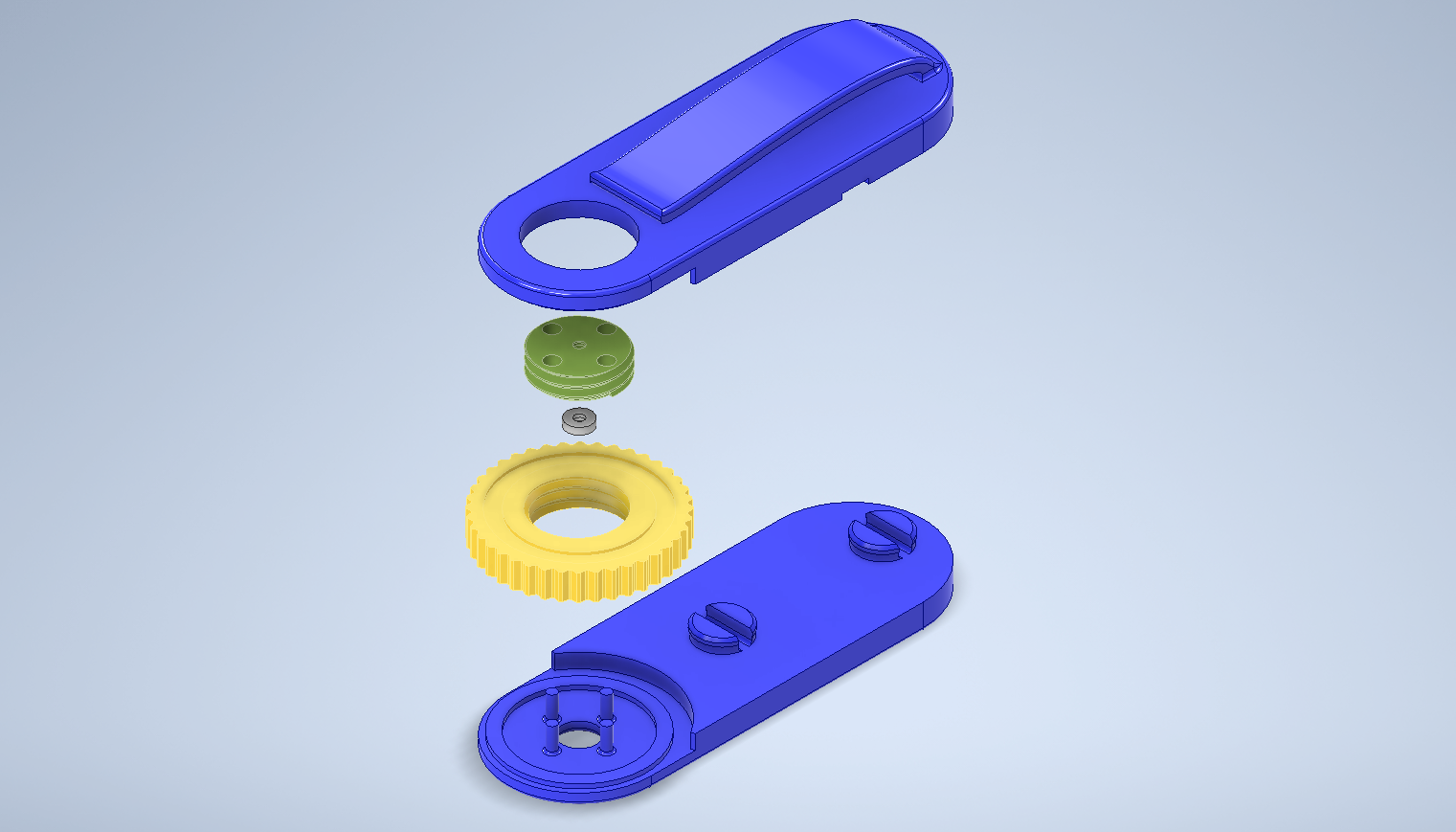
if you need further instruction on how to assemble the model and use it, you can acces the tutorial video via this link bellow :
*You will need to make the lens additionally by using a borosilicate glass, which tutorial of making the glass lens bead can be watched in this video :
*Please do not further resell this product to the market, without the creators agreement, because we have every lawsuit and rights to sue those who gain profit of this model,product,Etc without the creators permission
*The model are originally designed and improved by the student of ASTRAtech Engineering Student : Gusti Ivan, Ahdika, Aditia Anggara, Fahmi Yusuf, Daffa Restu, Fachri Ali, Artha Jelin, Dea Gustina
Pocket Microscope

Publicado em 28 de mai de 2025