Você está no 3DFinder
Buscamos em Thingiverse, MakerWorld e Printables ao mesmo tempo para te dar o melhor de cada uma.
Descrição
🎶👃 The Ultimate Nose Flute – A Real Working Masterpiece! 👃🎶
After countless prints and tiny micro-adjustments, it’s finally here – my fully functional Nose Flute! 🎉 Unlike traditional designs, this flute features not just one, but two tone-producing edges, unlocking a whole new range of sounds.
💨 How does it work?
The first edge generates high-pitched notes directly through the nasal airflow, while the second edge, positioned lower, enables the classic nose flute principle. The magic happens when you shape your mouth into an O-form, adjusting the pitch with subtle changes in openness. 🎼
💡 A Little Tip!
Don’t get frustrated if no sound comes out at first! Finding the right position, airflow, and mouth shape takes a little practice—but once you get the hang of it, you’ll unlock a world of unique, whistling melodies! 🎵
Get ready to experience the joy of this tiny masterpiece—I hope you have as much fun playing it as I did creating it! 🤩
General Principle of a Nose Flute
- Airflow Mechanism: You blow air through your nose into the flute. The air passes over a sharp edge inside the flute, producing a tone.
- Mouth Cavity as a Resonator: Unlike regular flutes that use finger holes to change pitch, the shape and position of your mouth determine the pitch. Your oral cavity acts like a resonator.
- Pitch Control: By changing the shape of your mouth (moving your tongue and jaw), you modify the resonant frequency, allowing you to play different notes.
… so how to Use your new Nose Flute Correctly ;)
- Position the Flute:
- Place the nose flute firmly against your nose and mouth.

- Your mouth should remain open, aligning with the instrument’s mouthpiece.
- Blow Through Your Nose:
- Take a deep breath and exhale steadily through your nose.
- Avoid using your mouth to blow—only the nose provides airflow.
- Control the Pitch:
- Keep your lips slightly open.
- Move your tongue and jaw to change the shape of your oral cavity.
- Experiment by raising and lowering your tongue—a smaller mouth cavity creates higher notes, while a larger one produces lower notes.
Special Thanks…
At this point, I would also like to mention Seba650, whose nose flute design served as an inspiration and model for me. From a design perspective, the shape as well as the main air channel were modeled after his flute ([https://makerworld.com/de/models/2224944-nose-flute-nasenflote#profileId-2419942](https://makerworld.com/de/models/2224944-nose-flute-nasenflote#profileId-2419942)) ; however, they were reinterpreted and reissued through countless iterations and redesigns. Many thanks.
Enjoy and happy printing…
"Just drop a comment and let me know what you think of the nose flute—I love feedback!" thx.. 😊🎶
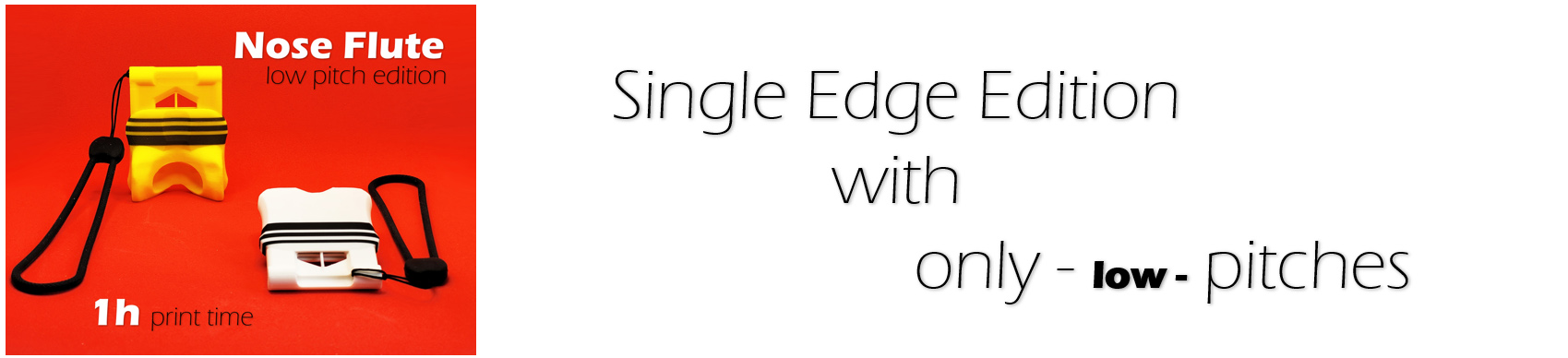
…for all of you who can't get enough from nose flutes, here is a single edge “traditional” nose flute without these high pitches:
[https://makerworld.com/de/models/1301715](https://makerworld.com/de/models/1301715)

Gostou deste modelo? Crie uma conta grátis para salvar seus favoritos e voltar a eles depois.
Criar conta