Você está no 3DFinder
Buscamos em Thingiverse, MakerWorld e Printables ao mesmo tempo para te dar o melhor de cada uma.
Descrição
Commercial license for all my models -→ [https://www.patreon.com/MeasureOnce](https://www.patreon.com/MeasureOnce)
If you are printing with a textured buildplate, the parts might be a little too tight initially. To loosen it up, force the lower jaw to the bottom most position and then to the top most position several times in quick succession and it should start to loosen up.
Description
These calipers are accurate up to 0.5mm. They are perfect for those who always want to have a measurement tool on the go. Clip it to your backpack, keys, or belt loop. It weighs less than 6 grams, takes 25 mins to print, and cost $0.15 to make. Mix and match colors to find the perfect combination to suit your style!
ACCURACY
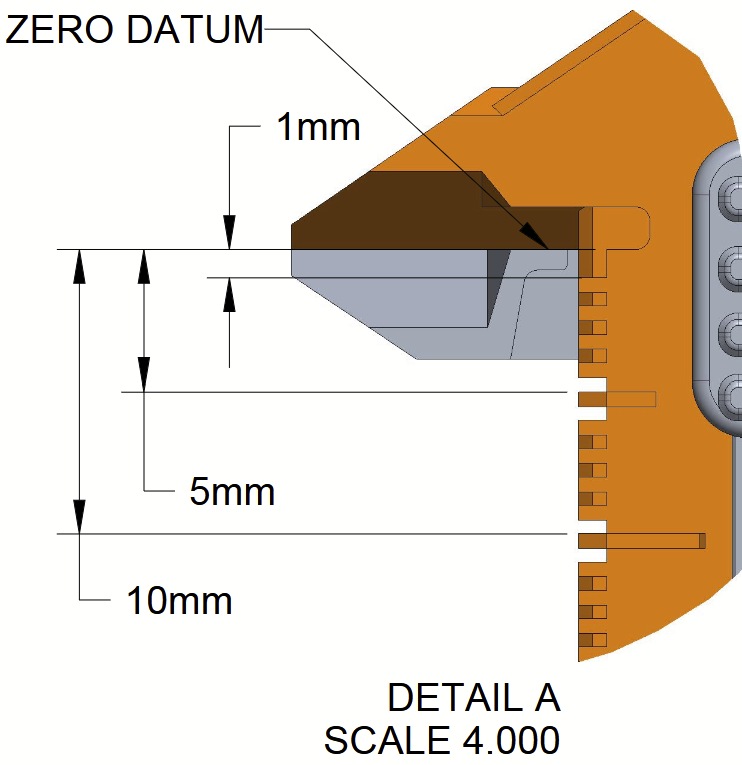
Each smaller notch, going from top of the notch to the top of the following, will measure out to be 1mm. The long notch is representative of 10mm and the notch half its size is representative of 5mm. Using the measurement datum on the lower jaw, you can determine the measurement based on which notch the datum aligns up with.
MEASUREMENT TECHNIQUES
Calipers are a must-have tool for anyone looking to start designing. Although many individuals own a caliper, not many know all of the different measuring techniques a caliper set offers. Keychain calipers has 3 different ways that you can use it to measure.
The first is the one that is the most intuitive and that is the outside measurement. By placing the caliper jaws around the outer surface of an object and closing them, you can measure the overall external dimension.
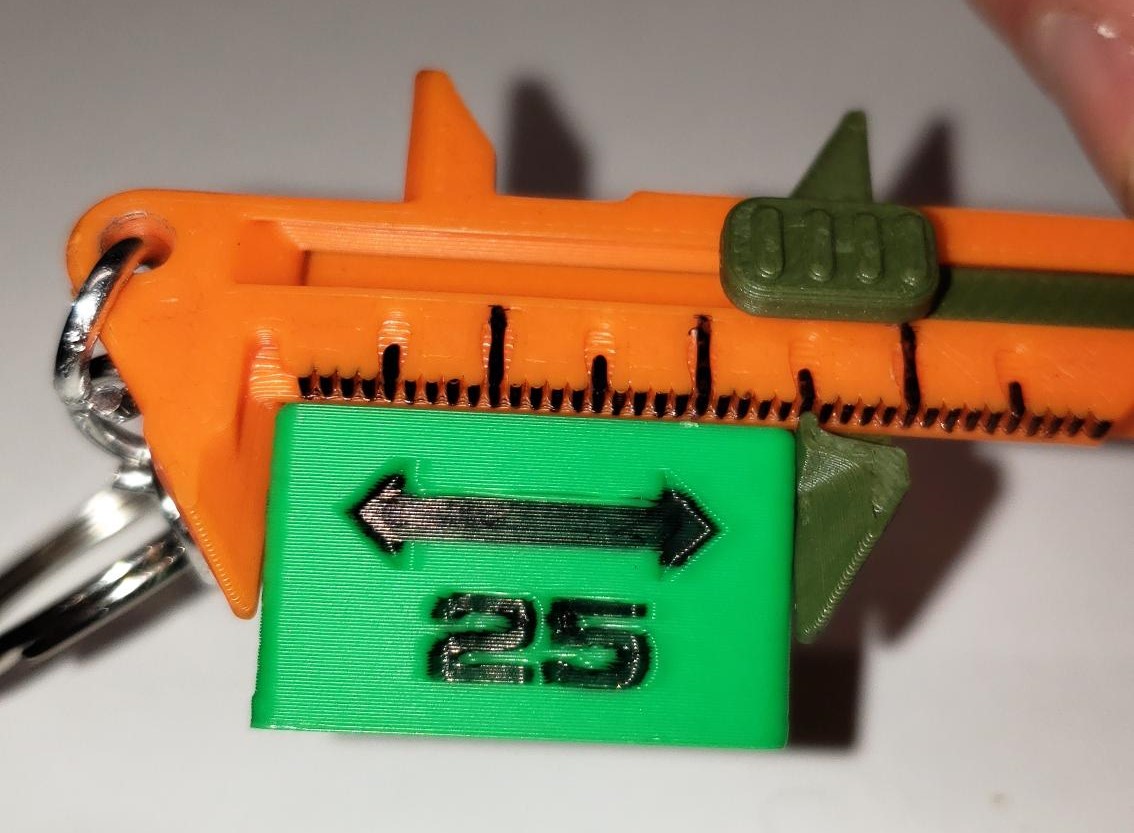
The second is the inside measurement. Using the jaws on the back of the caliper, you can measure the distance between two inner surfaces, like the diameter of a hole.
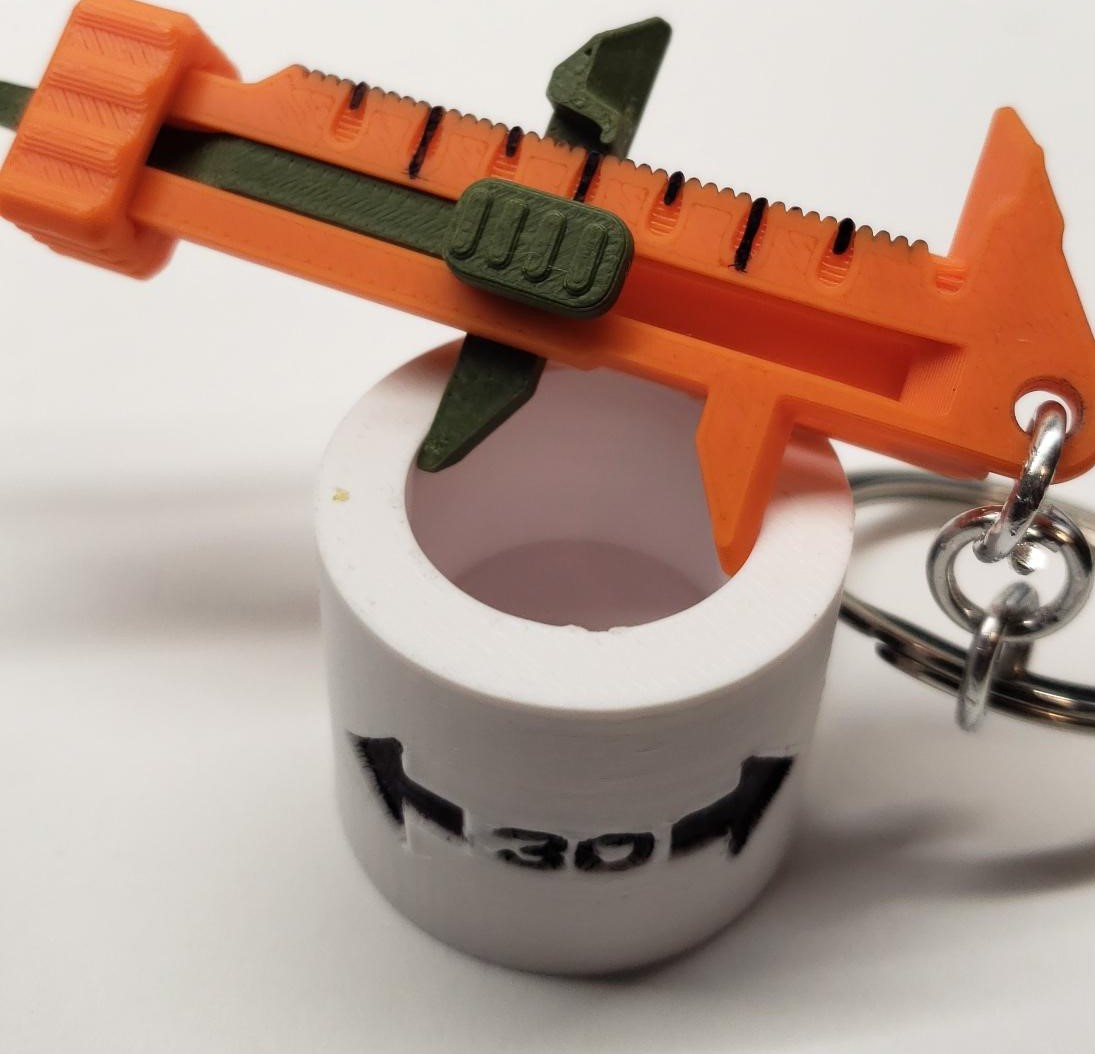
The third is the depth measurement which is depth measurement. By using the probe that protrudes out from the bottom, you can measure the depth of a cavity or blind hole by placing the caliper body against the top surface and extending the probe to the bottom.
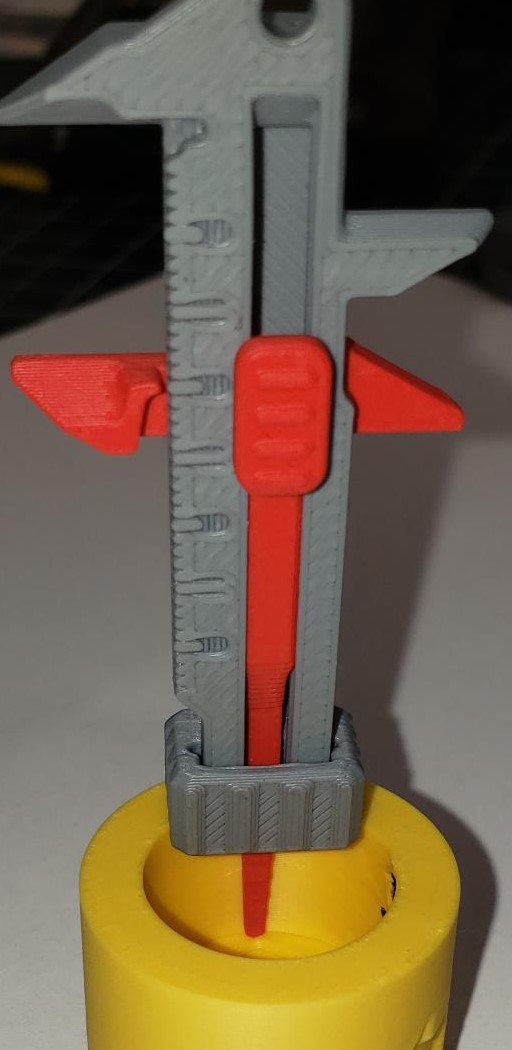
ASSEMBLY
- Slide the lower jaws onto the upper jaws as shown below.
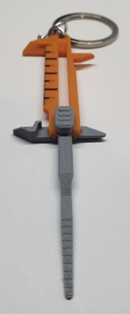
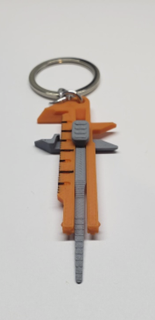
2. Slide the frame onto the back of the jaw assembly as shown below.
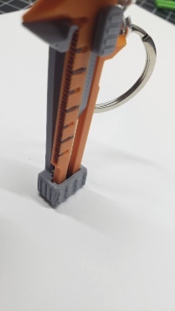
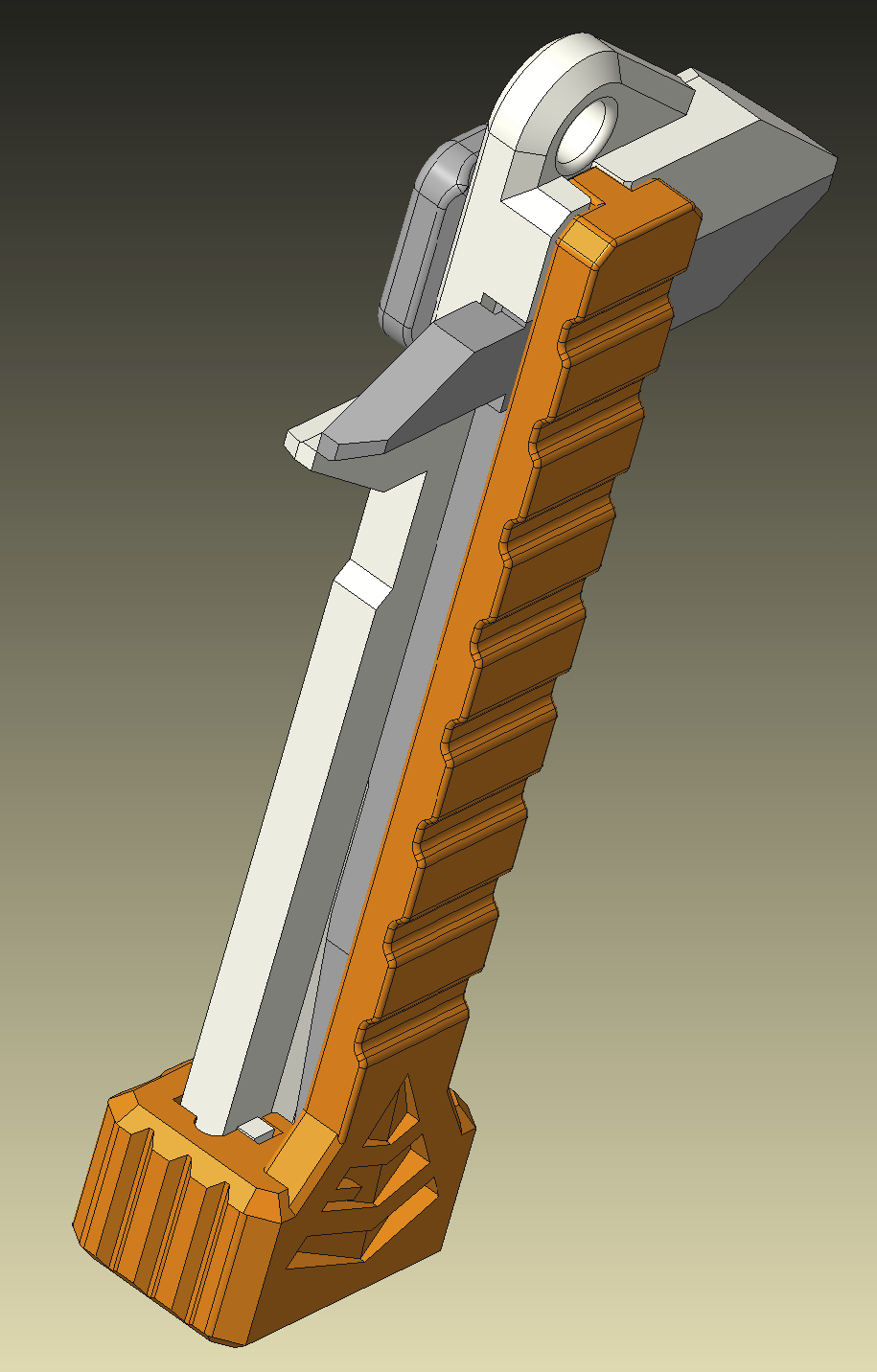
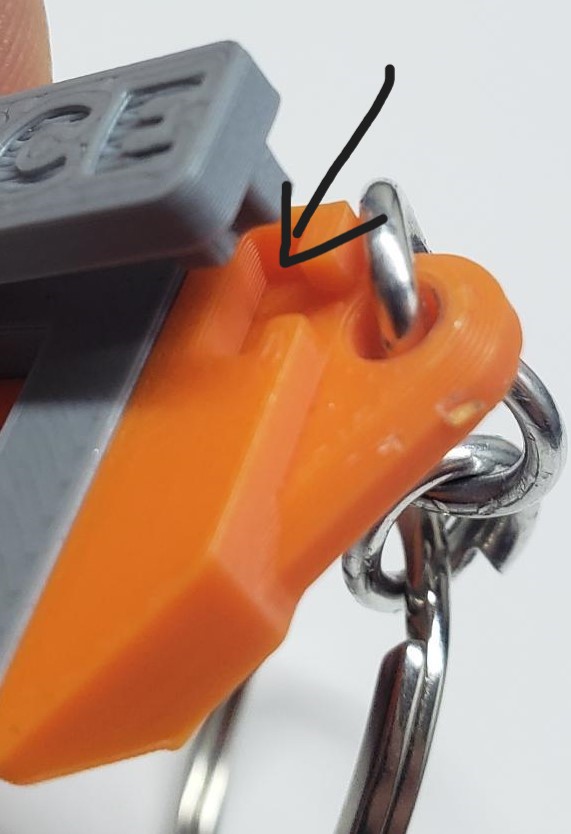
3. For a more secure hold, a small amount of glue can be applied in the top cut out in order to lock the frame to the top jaw. If you are printing with a textured buildplate, the parts might be a little too tight initially. To loosen it up, force the lower jaw to the bottom most position and then to the top most position several times in quick succession and it should start to loosen up.
Commercial license - [https://www.patreon.com/MeasureOnce](https://www.patreon.com/MeasureOnce)